
AI has made first drafts FAST. A blog that used to take three hours can appear in 20 minutes. A LinkedIn post? Five. Email? Done before you’ve finished your coffee.
Then you go ahead and open up the draft. And, let me guess, your brain is going:
“Do we really say this?”
“Where did that stat come from?”
“This isn’t quite what the service does.”
“Why has it called us ‘industry-leading’?”
“Has anyone checked whether we’re allowed to say that?”
“Why does it keep repeating ‘practical solutions’?”
Now, your 20-minute piece has acquired another hour and a half of human work.
Why? Because somebody still needs to look at the content with a trained human brain and decide whether it’s accurate, on-brand, appropriate, search-ready, and genuinely worthy of having your company name slapped underneath it.
These are your brand guardians.
I’ve never heard of a brand guardian. What do they do?
No idea what I’m on about? Okay, let me explain:
A brand guardian is someone responsible for protecting how a brand looks, sounds, and presents itself to the world.
Traditionally, brand guardians might keep an eye on things like:
- Logo use
- Visual identity
- Brand messaging
- Tone of voice
- Campaign consistency
- Brand guidelines
Once AI-assisted content is involved, there’s a whole extra pile of stuff to watch.
Your brand guardian now needs to ask questions like:
- Does this sound like us?
- Is the information correct?
- Has AI made something up?
- Is this claim stronger than the evidence supports?
- Is the tone right for the subject?
- Has important context disappeared?
- Does this still reflect our positioning?
- Is the content valuable enough to publish?
- Is it optimised properly for search?
- Would we happily put our name on this?
That last one is the biggie.
Because a piece of content can be beautifully written and structurally sound, but completely wrong for your brand.
A quick proofread just ain’t enough for AI-assisted content
Please proofread your stuff. We remain very much in favour of spelling words correctly. But proofreading mainly catches surface-level issues: spelling, punctuation, formatting, grammar, and obvious inconsistencies.
AI brings deeper problems: It can misunderstand your positioning, remove context, introduce language your team would never use, invent things, among many other branding blunders.
And if you’re a high-trust brand in healthcare, finance, legal, HR, or another sensitive space, those mistakes can really be an even bigger deal.
That’s the stuff a quick proofread won’t catch. A brand guardian will.
So, what are they checking for?
#1 Does it sound like your brand?
Brand guardians check whether the content feels like it came from your specific company rather than Generic Ass Business & Co.
They’ll look at:
- Vocabulary
- Sentence rhythm
- Level of formality
- Humour
- Directness
- Energy
- Personality
- Opinions
- Formatting
- Emotional tone
AI is often pretty good at picking up the surface stuff. Tell it your brand uses short sentences and contractions, and it’ll probably manage.
Tell it you like the occasional cheeky joke, and it’ll dutifully start making cheeky jokes. Probably far too many in fact! But only humans can really judge when those choices work.
Would your brand joke about this topic? Would it use that phrase when talking to this audience? Would it normally be more direct here? Does this section feel too polished and corporate? Is AI trying SO hard to sound playful that everyone reading it can practically hear the prompt?
Those calls need someone who knows your brand like the back of their hand.

#2 Is the tone right for this particular topic?
Your brand voice stays fairly consistent, but your tone can slide around depending on the audience, the platform, and what you’re talking about.
So brand guardians need to judge things like:
- How serious is the subject?
- How stressed might the reader be?
- Is humour appropriate?
- Does this need more reassurance?
- Should we get to the point faster?
- Could any phrasing feel dismissive?
- Are we treating a sensitive topic too casually?
This is one of those areas where having a list of tone-of-voice adjectives only gets you so far. “Warm, witty, and approachable” doesn’t tell you whether a joke about a customer’s legal problem is a terrible idea.
A brand guardian can.
#3 Has AI made the brand sound suspiciously impressive?
AI LOVES confidence. Sometimes a little too much. Give it: “Our clients often tell us the onboarding process feels easy.”
And there’s every chance it’ll come back with: “Our clear, practical, and seamless onboarding process guarantees a completely stress-free experience.”
A brand guardian will be like, chill. Part of their job is to spot wording that goes a bit OTT.
Things like:
- Guaranteed
- Proven
- Risk-free
- Best-in-class
- Industry-leading
- Trusted by thousands
- Completely secure
- Number one
- Revolutionary
- Unmatched
Then they ask: Can we prove that? If not, the wording probably needs another go.
#4 Has anything been invented?
AI hallucinations have become famous for a reason. Take any AI draft, and you’ll probably find:
- Statistics that don’t exist
- Sources that lead nowhere
- Made-up customer quotes
- Invented case study results
- Fake awards
- Incorrect credentials
- Imaginary service features
- Company opinions nobody ever expressed
- Dates pulled from its butt
Brand guardians should know exactly where the information in the draft came from. If a claim isn’t supported by the brief, source material, or a reliable source, they flag it before it ruins your rep.
#5 Are the facts being used in the right context?
Sometimes the fact itself is real, but the way AI uses it is the problem.
Maybe the research:
- Is five years old
- Only applies to one country
- Was carried out in a completely different sector
- Looked at consumers while your audience is B2B
- Used a tiny sample
- Says “may” while your draft says “will”
- Came from a source with an obvious commercial interest
A stat can be “correct” by all accounts, but still give the reader the wrong impression. Good brand guardians look at the original context before letting it through. They’ll check the source, date, scope, geography, and what the research really concluded.
It’s not the sexiest work ever, but I’ll be damned if it’s not important.
#6 Is important context missing?
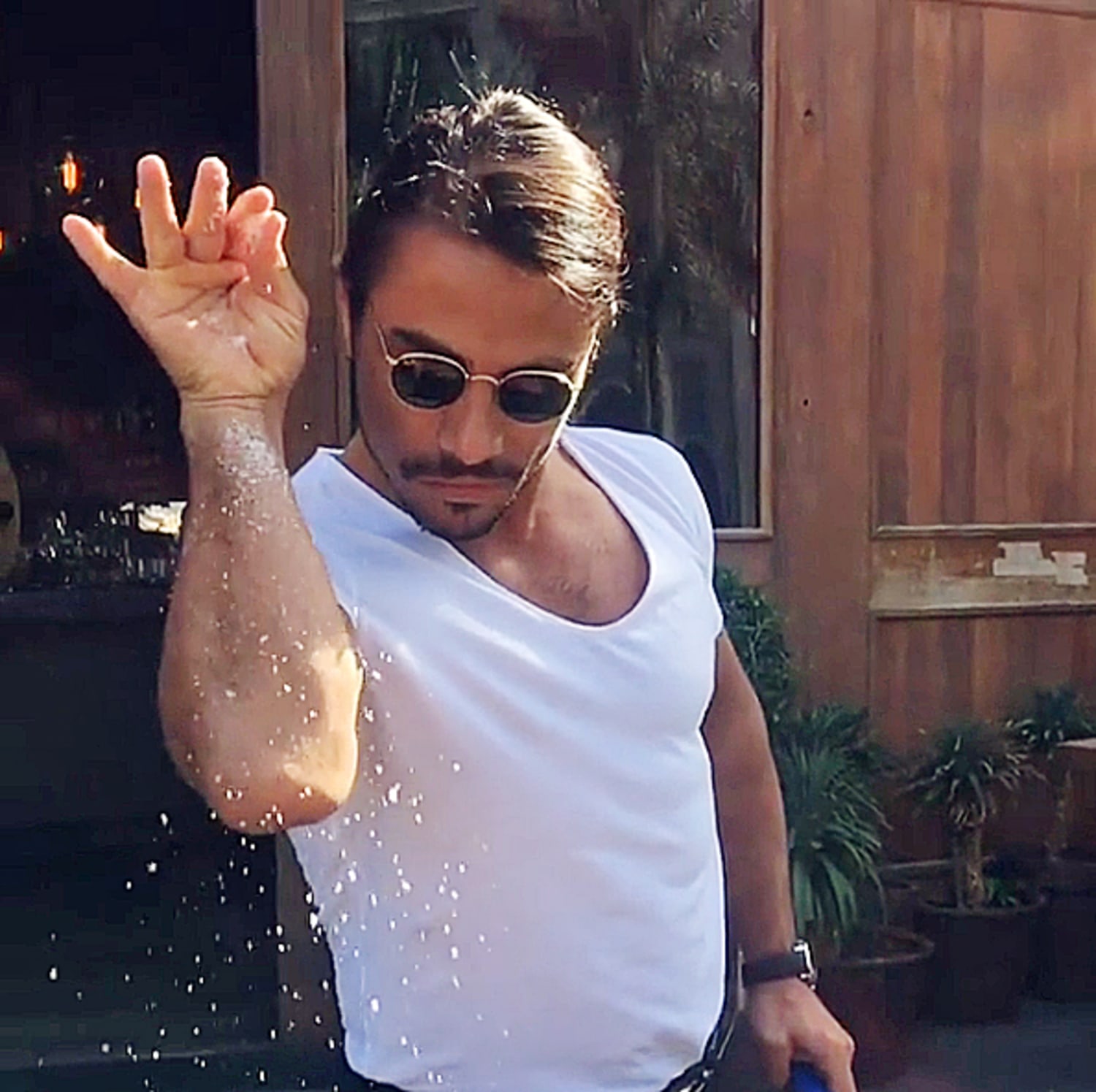
AI-generated drafts often look like they’ve covered everything. It has a nice start, a beefy middle, and an outro that finishes the piece to salt bae perfection.
Then somebody who understands the subject reads it and says: “Ehh…we’ve missed the most important bit.” That’s because AI is very good at filling a structure, but it won’t know which information absolutely has to be there.
Brand guardians look for missing:
- Caveats
- Proof
- Examples
- Process details
- Limitations
- Counterpoints
- Pricing information
- Audience-specific advice
- Next steps
- Important definitions
- Context only someone experienced in the subject would know
Missing context can completely change how a point lands. Brand guardians check that the reader has enough background, nuance, and explanation to understand the information properly.
#7 Has your positioning wandered off somewhere?
Let’s say you’re a specialist consultancy working with established B2B companies. AI rewrites you as: “A full-service provider helping businesses of all sizes achieve their goals.”
Small language changes like that can pivot your positioning over time. A brand guardian checks whether the content still reflects:
- Who you work with
- What you specialise in
- What you’re known for
- Which problems you solve
- How services are described
- Which differentiators are important
- What kind of client you’re trying to attract
Because if one blog describes you as a specialist, another calls you full-service, LinkedIn says something else, and your website has a fourth version, you’ll confuse both humans and AI search engines VERY quickly.
#8 Is there anything here that could only have come from you?
AI regurgitates what already exists on the internet. Brand guardians make sure your content could only be written by you.
They will look for the stuff that makes the piece yours:
- First-hand experience
- Specific opinions
- Original examples
- Customer insight
- Expert commentary
- Real stories
- Your process
- Strong proof
- Lessons learned from doing the work
- Any details competitors haven’t mentioned
“Communication is important for effective leadership.” Groundbreaking stuff there.
Tell me what your HR consultant saw happen when a leadership team stopped communicating properly during a restructure.
Now we’ve got something.
#9 Has AI said the same thing 14 times?
We’ve all seen it.
Paragraph one: CRMs save teams time. Paragraph two: One of the biggest benefits of a CRM is the amount of hours it frees up for teams. Paragraph three: Teams can work more efficiently by using a CRM to save valuable time.
YES. WE GET IT.
AI loves to repeat the same thing over and over again.
That’s why brand guardians cut:
- Repetition
- Empty transitions
- Long introductions
- Sections that add nothing new
- Repeated conclusions
- Three examples where one would do
Good editing gives the actually helpful information more room to breathe.
#10 Does the structure help someone get the answer?
The structure needs a look too.
A brand guardian might ask:
- Does the helpful information appear early enough?
- Are the headings clear?
- Does each section have a job?
- Are paragraphs too long?
- Would bullets make this easier to scan?
- Does the order feel logical?
- Is there a clear next step?
This is super important for humans first and foremost, but good structure also helps AI search and Google make sense of the content.
#11 Is it ready for SEO, AEO, and GEO?
If the content is being published online, brand guardians should also be checking whether it has a decent chance of getting found.
For SEO, that could include:
- Search intent
- Keyword use
- Titles
- Headings
- Internal links
- Metadata
- Topic coverage
For AEO:
- Clear answers
- Question-led sections
- Definitions
- Lists and tables where needed
- FAQs
- Easy-to-pull information
For GEO:
- Clear company information
- Consistent service descriptions
- Expertise
- First-hand insight
- Credible proof
- Specific terminology
- Helpful, easy-to-quote info
There’s a very important extra check brand guardians do: Does it still sound like that brand after all that optimisation?
Because nobody wants to read: “Our expert content marketing services help businesses seeking content marketing support achieve content marketing success.”
I need a lie-down after writing it.
What should a proper AI content review process include?
Love a checklist? Same. Here’s yours for reviewing AI content like a brand guardian would:
Stage 1: Check the facts
Review:
- Claims
- Sources
- Statistics
- Quotes
- Names
- Dates
- Services
- Credentials
Stage 2: Check the brand
Review:
- Voice
- Tone
- Personality
- Positioning
- Messaging
- Vocabulary
- Banned phrases
- CTA
Stage 3: Check the substance
Look for:
- Original thinking
- Examples
- Context
- Proof
- Expertise
- Nuance
- Missing information
Stage 4: Check the structure
Review:
- Flow
- Headings
- Repetition
- Paragraph length
- Readability
- Scannability
Stage 5: Check the search stuff
Review:
- SEO
- AEO
- GEO
- Internal links
- Metadata
- Search intent
Stage 6: Check the risk
Flag:
- Risky claims
- Compliance issues
- Sensitive wording
- Anything needing legal or subject-matter review
- Anything that could create reputational trouble
Stage 7: Read it again
From top to bottom. As a normal human being.
- Does it sound good?
- Does it answer the question?
- Do you trust it?
- Would you confidently publish it under your company’s name?
If you’re hovering over the button thinking, “Ehhhhhh…”
Back to editing we go.

Want a brand guardian on speed dial?
Maybe AI has made content creation faster.
Unfortunately, your Head of Marketing is now spending hours rewriting intros, checking stats, removing funky AI phrases, and leaving comments like “WE WOULD NEVER SAY THIS” in Google Docs.
With our Brand Voice Guardianship retainer, we can step in as that final human layer.
You send us your drafts. We proofread, copyedit, improve, question, and finalise the work, then return every piece with tracked changes and editing notes so your team can see exactly what happened and why.
Over time, the content gets stronger, your team gets better guidance, and your senior people can stop being drafted into emergency copyediting duty.
Want to try it out? Talk wordy to us to get started.