All of our content is researched and written by human writers. No robots here!
Instead of putting out another “2026 trends” list that’ll age badly by March, we wanted to do something else. We wanted to be honest about what we hope disappears this year… and what we’d love to see take its place.
Call it an In / Out list for content in 2026 filled with honest thoughts, hopes, and predictions from our team of expert writers.
In: Brainy-ness
Out: Laziness
Look, we’re not saying that every tom, dick, and harry who uses AI for their content is lazy. We know that’s not the case.
But using AI to write content without any strategy, any fact checking, and any editing? That is lazy (sorry). And it’s precisely what leads to more and more AI slop clogging up our online spaces, more branding fails, and eventually more unfollows.
Just because content is faster, doesn’t mean it’s better. In fact, we’d really love it if more brands posted less and spent longer thinking about what to say and how to say it.
In 2026, we’re hoping for a swing back towards content that feels deliberate. Content that clearly took time. We want more pieces where you can tell someone cared enough to think, edit, delete half of it, and then say the thing properly.
Let’s bring back using our big, beautiful brains!
In: Actual opinions and originality
Out: Regurgitation and thought-stealing
We’ve all seen the same LinkedIn posts, rewritten 12 times by 12 different people, all rehashing the same “hot take” that stopped being hot about three months ago.
AI has made it incredibly easy to recycle ideas without even realising you’re doing it, and the result is a big tumor-ific mass of same-y stuff.
What we’d love to see in 2026 is more people trusting that their own thinking is enough. Your experiences, mistakes, lessons learned the hard way, emotionally-charged stories – those are the bits people actually want.
You’ll never get that kind of originality from a robot. It can only come from paying attention, owning your unique perspectives, and being brave enough to share them.
In: Authentic, personality-driven content
Out: Generic, AI-blurred voices
There’s a strange sameness creeping into brand content lately, and once you notice it, you can’t unsee it.
It’s the inevitable side effect of AI-assisted writing mixed with risk aversion, light editing, and a fear of sticking your neck out. The result is content that ticks boxes but leaves absolutely no impression, which is a real problem when attention is already so thin.
What we’re hoping for in 2026 is a proper return to personality-led content. The kind where you can tell who’s behind it within a few lines. The kind that reflects how people actually speak, think, joke, and disagree.
We’d love to see more brands trusting that their voice, their stories, and their way of seeing the world is interesting enough without being smoothed into “meh”.
In: Appreciation for human writers
Out: Hiring bots instead
(We would say that though, wouldn’t we?)
The last few years have been tough going for a lot of writers. Seeing your job title show up on “jobs most likely to be replaced” really doesn’t feel good. What’s worse is knowing how quickly quality drops once you take trained writers out of the equation.
AI can generate text, but it can’t care. It can’t weigh consequences, understand cultural moments, or draw on years of conversations, mistakes, wins, and gut feelings. A good writer has the ability to decide what not to say, how far to push an idea, when to be subtle, and when to go all in.
Our hope for 2026 is that brands stop seeing writers as an interchangeable cost and start seeing them as strategic partners whose experience, taste, and instincts protect brands just as much as they build them!
In: Taking the environmental cost of AI seriously
Out: Overusing AI for meaningless crap
AI feels intangible, so it’s easy to forget there’s real infrastructure behind it (servers, energy, resources) all working overtime to pump out content most people won’t even read. Mass-producing automated content has a devastating impact on our planet, with AI emitting the same carbon emissions as New York in 2025!

Now, look, we’re not here to wag fingers or demand purity. We’re just hoping that in 2026, more brands pause before generating yet another post and ask whether it actually needs to exist. Fewer AI chats made “just because”, and more care in what we put into the world, and why.
In: Honesty about how AI is used
Out: Not disclosing AI use in content
Right now, audiences genuinely don’t know what they’re reading.
Was this written by a human? Generated by AI? Prompted, tweaked, edited, pieced together at 11pm on a Wednesday by a human writer? Brands aren’t saying, and people are starting to feel weird about it. And honestly, fair enough.
We’ve already seen the backlash when brands cut corners with AI ads, videos, and even models (Hello Coca Cola’s recent AI Christmas campaign fail, we’re looking at you).
Most people are fine with tech when it’s used responsibly, what they’re reacting to is the sense that something’s being hidden. So If we could wish one thing into existence for 2026, it’d be more transparency around AI use in content.

In: Proper research
Out: Blindly trusting AI
One of the most worrying things we saw in 2025 was how confidently incorrect AI-generated content can be, and how often that confidence went unchecked. Entire articles published with fake sources, wrong facts, or half-true claims because someone assumed the tool had done the homework.
(It hadn’t).
The European Broadcast Union and BBC found that AI assistants misrepresent news content 45% of the time. 45 friggin percent!!
Add to that the Chicago Sun-Times publishing a summer reading list full of AI-invented books that don’t actually exist (yes, really), and it’s no wonder people are side-eyeing everything they read online.
In 2026, we’d love to see research taken seriously again. Real sources, human verification, and a bit of healthy scepticism before hitting publish. Trust is fragile, and once audiences realise they’re being fed misinformation (even accidentally) it’s very hard to win that confidence back.
In: Content written for humans (that AI can understand)
Out: Writing for machines and ignoring real readers
AI-powered search and AEO are clearly not going anywhere. We’re already seeing it with Google’s AI overviews, ChatGPT answers replacing ten blue links, and people asking questions directly instead of “searching” in the old sense.
The content that performs best in AI search is already showing us something important: it’s clear, well-structured, genuinely helpful, and written by people who understand their subject thoroughly enough to explain it.
Our hope for 2026 is that AEO doesn’t become SEO 2014 all over again, just with fancier tools and worse writing.
We want to see the kind of content a smart human would recommend to another smart human. Because, as it turns out, that’s exactly what AI systems are being trained to serve up to people in AI-powered searches!
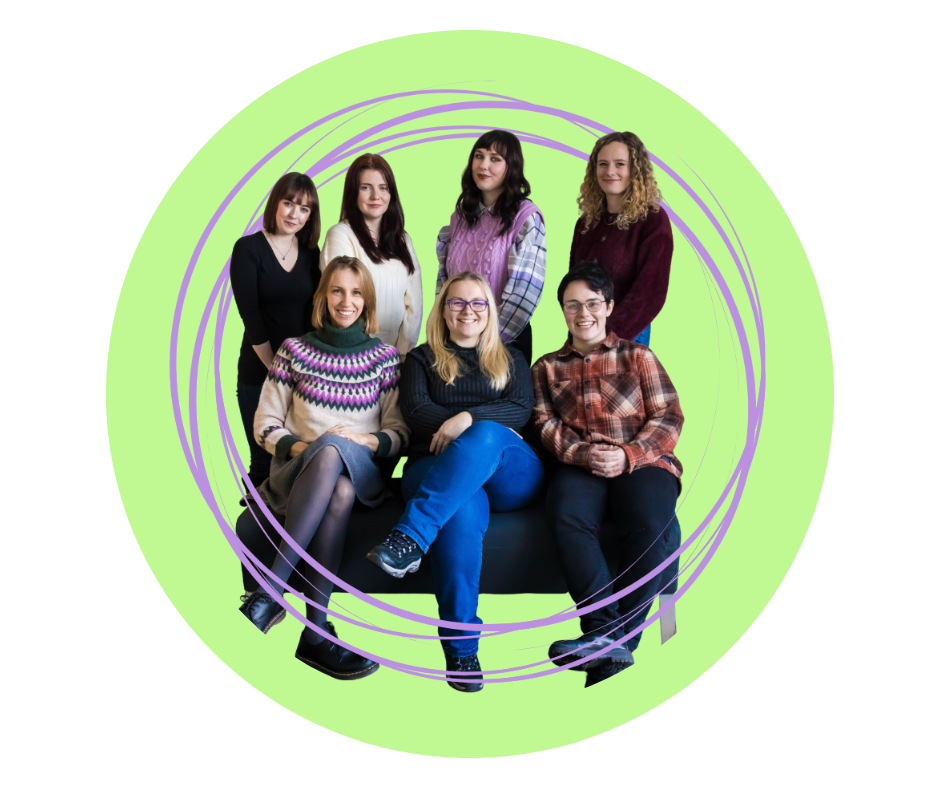
Here’s what each of our team are hoping for in 2026
“My hope for this year is that the internet becomes a positive source of truthful information again. Huge change needed, I know. Possible? Who knows. My dream for online content in 2026 and the future is publishers and major contributors appreciate and value human writers again. People want human connection and stability, not more crappy generic rubbish designed to make them consume more.”
- Abby Wood, Founder & Content Strategist
“Hoping really this year that an appreciation for creativity and art returns. It’s unsettling to see people share and praise work made by a computer that’s simply just copying and printing a sad mish mash of actual art. I’m dreaming of a 2026 where online content, both written and visual, is created by humans and enjoyed by humans. The more AI is pushed and used, the more the internet loses what always made it enjoyable. The more we lose genuine content created by actual artists including writers, painters, videographers, photographers, photoshop aficionados and other digital creatives.”
- Riley Barry, Content Writer & Project Manager
“I’m hoping for a Very Human 2026, warts and all. Less mindless scrolling, more feet in the grass. Less lukewarm slop on repeat, more personality and thought. Less content, more connection. Less statistics, more community. At the end of the day, we only get one “wild and precious life” (Mary Oliver), and it doesn’t last forever. I’m hoping to see organisations remember that at the heart of it all, we are human: fleeting and flawed and loving and lonely, overworked and overwhelmed, searching for meaning in all that we do. Let 2026 be the year we make meaning, break free from empty initiatives, and take better care of each other.”
- Mia Vance, Editor
“My hope for 2026 is that we remember content is meant to come from people. Actual humans, with opinions, instincts, bad days, and big ideas. I’d love to see more writing that comes straight from the soul instead of being run through an AI filter to make it sound “better.” And I really hope spaces like Substack continue to grow, because long-form, personal writing still has an audience, even if it takes longer than 30 seconds to read.”
- Ciara Meagher, Brand Strategist & Content Writer
“I’m really hoping 2026 is the year we step back from endless doomscrolling. It was already bad, but it’s even worse now with so much AI-generated slop filling every feed. I’d love to see people craving real life again: real writing, real creativity, real art, real connection. Even a return to physical media – books, magazines, records, DVDs – things you can hold in your hand and slow down with, intentionally and mindfully. I want humans to be human again, basically.”
- Simone Smith, Strategist & Content Writer